
Does Sperm Quality Affect Embryo Development?
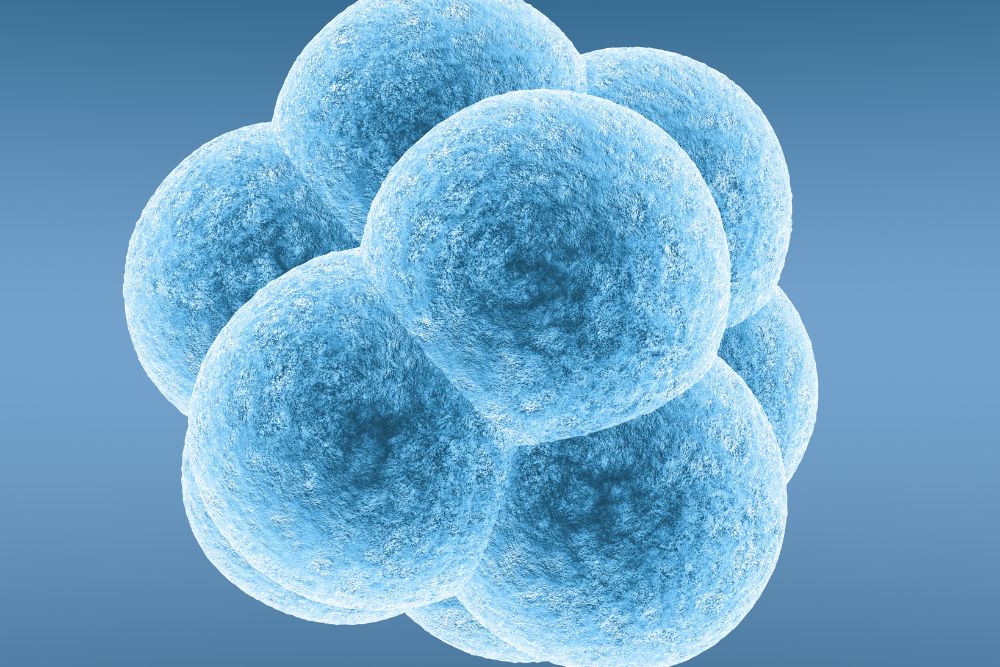
Sperm delivers half of an embryo's nuclear genetic material and plays a role in early development. If you're experiencing difficulty conceiving or have had unsuccessful fertility treatments, understanding the relationship between sperm quality and embryo development may help you better understand your reproductive health.
Sperm’s Role Beyond Fertilization
During fertilization, sperm and egg combine their genetic material to form an embryo. The egg provides most of the cellular machinery needed for early development, while sperm contributes DNA and other factors involved in activating that process.
Not every fertilized egg continues developing. Some embryos stop growing before reaching the blastocyst stage, when they may be considered for transfer or freezing. Development depends on several factors, including egg quality, sperm health, and the integrity of genetic material from both partners.
What Does a Semen Analysis Measure?
A semen analysis is usually the first step in evaluating male fertility. It measures three primary characteristics:
Count: The number of sperm in a sample. A lower count means fewer sperm are available to reach and fertilize an egg.
- Motility: How well sperm move, particularly whether they can swim forward toward an egg.
- Morphology: The size and shape of sperm. Structural abnormalities may affect movement or the ability to fertilize an egg.
These measurements provide useful information, but they do not guarantee fertility. Results within expected ranges do not rule out all sperm-related concerns, and abnormal results do not mean pregnancy is impossible. Semen quality can also vary between samples.
Understanding Sperm DNA Fragmentation
A standard semen analysis does not directly assess the integrity of sperm DNA. DNA fragmentation refers to breaks or damage in the genetic material carried by sperm. Research has associated higher fragmentation levels with lower pregnancy rates and an increased risk of pregnancy loss. It may also be associated with difficulties during embryo development.
However, the evidence is not definitive. Studies use different testing methods, and DNA fragmentation alone cannot predict whether an embryo will develop successfully. Testing is not recommended for every initial infertility evaluation but may be considered in situations such as recurrent pregnancy loss or repeated unsuccessful fertility treatment.
What Factors Can Affect Sperm Quality?
Several medical, environmental, and lifestyle factors can affect sperm quality and DNA integrity, including:
- Advanced paternal age
- Varicoceles (enlarged veins within the scrotum)
- Smoking and excessive alcohol consumption
- Certain infections and medical conditions
- Exposure to excessive heat or environmental toxins
- Certain medications and medical treatments
Depending on the underlying cause, treating a medical condition or making certain lifestyle changes may help improve sperm quality. Because sperm production takes approximately two to three months, improvements may not be immediately apparent.
When Is Further Evaluation Appropriate?
Fertility specialists evaluate male-factor infertility through medical and reproductive history, physical examination, and semen analysis. Depending on the findings, additional testing may include hormone evaluations, genetic testing, or sperm DNA fragmentation testing.
Treatment recommendations depend on the underlying cause and the couple’s fertility circumstances. Some conditions may be treatable, while assisted reproductive techniques such as in vitro fertilization [IVF] or intracytoplasmic sperm injection (ICSI) may help address certain sperm-related challenges.
ICSI involves injecting a single sperm directly into an egg to facilitate fertilization. Although this technique can help overcome certain sperm-related barriers to fertilization, it does not repair damaged sperm DNA or eliminate the risk of problems during embryo development.
Sperm Testing and Fertility Care at Fertility Center of California
At Fertility Center of California (FCC), our specialists evaluate both partners to identify factors that may affect fertility and recommend appropriate next steps. If you have questions about sperm health or are experiencing difficulty conceiving, contact FCC to schedule a fertility evaluation.